
Diversity in the Dollhouse: Navigating Identity and Imagination
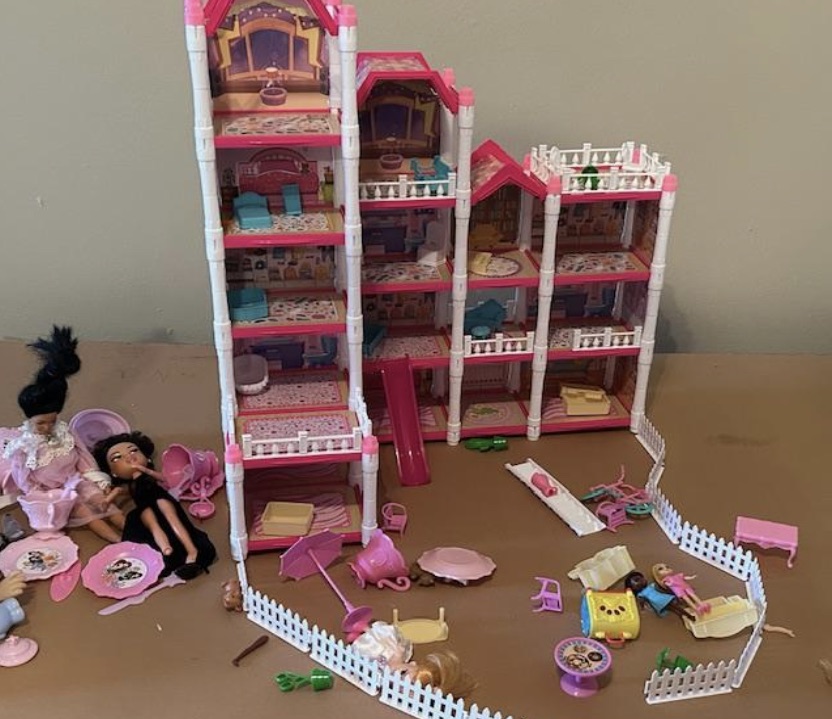
My daughter had a play date this weekend with her bff. She was excited about showing her the dolls and doll house she got for Christmas; and having a willing play partner for a change.
A few minutes into the play date, I overheard an exchange they were having about which doll they would each take. My daughter's argument was that she liked a particular doll and so that doll would "be her" while her friend also wanted the same doll because the doll looked like her.
I heard them resolve to come and ask me which doll they each looked like and they would then choose dolls based on that. So one doll is white and blond with blue eyes and a pink dress while the other is brown with black hair and a blue dress.
They came to me and repeated the conversation I had overheard. I wasn't sure how to respond. This is the first time race related questions have come up in play for my child.
So...I took a deep breath and told the girls that the dolls resemble them both in different ways. My daughter's skin and eyes are brown, her hair is black and she likes pink dresses. Her friend's skin is pinkish, eyes brown, her hair is dark and she likes both pink and blue dresses.
Since playing with dolls is fun and about imagination, they and their dolls are all beautiful and they have the freedom and power to be whichever doll they want. They can pretend to have no hair at all or to have pink or green hair, or black or rainbow or red dresses if they want.
How they and their dolls look must not limit their play and imagination.
Both girls left smiling still with the dolls they had come with and I heard them playing happily. My daughter declared that she was the president and her friend said she was ME.
In the moment they stood there, looking to me for an answer, I felt the weight of providing one that not only embraced truth and joy but would also help them think positively about themselves and each other. This moment will stay with me for a long time.
As an African woman, mother, and scholar, newly finding my feet and voice in a new country and navigating uncertain times, I draw inspiration from my daughter.
Being her mother requires me to process and translate a world that I can barely wrap my head around lately, to her.
Sometimes, the best I have is: "I don't know, what do you think, my love?" or "Let me think about that and get back to you later." or "Let's figure it out together", and that's okay. At other times, this does not suffice, and I need to reflect on my perspective and provide a starting point , a lens to help her frame the world as she explores and forms her own point of view.